


The 'Waag'
The ‘Waag’ – information for visitors.
The Enkhuizen weighing house dates from 1559. It is one of the few examples of the early Renaissance in the northern Netherlands. The frieze at the foot of both gables bears the coats of arms of Holland, Philip II (the 80 Years War had not yet started) and Enkhuizen. On the cornice are five statues, representing from left to right: justice, hope, faith, love and strength. The large wooden doors in the Waagstraat provide access to the weighing room, which is still completely intact. The weighing mechanism is present and can still function.
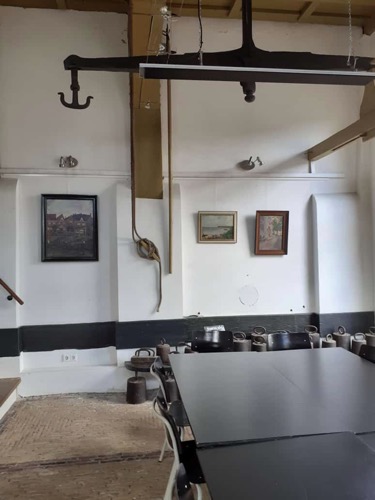
The purpose of a weighing house was twofold, to weigh goods so that the buyer paid a fair price, and to generate revenue in the form of taxes for the city. All products coming into the city therefore had to be weighed. An important product was cheese. Only in Enkhuizen were the cheese berries carried by women, there were many fatherless families due to shipping. The portico on the east side leads to the weighmaster's office.
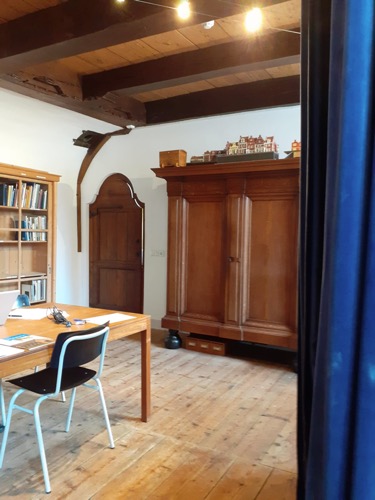
Above the portico is a memorial stone for the famous city doctor Paludanus, who was not only a doctor but also internationally known for his cabinet of curiosities.
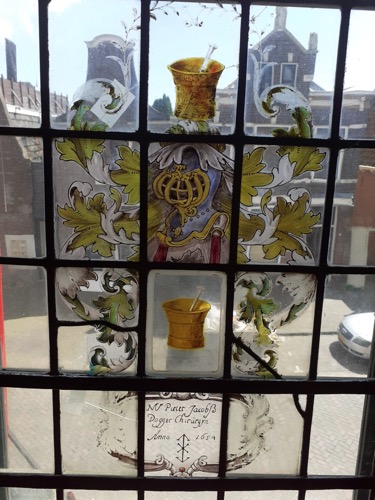
In 1636, the year that a plague epidemic raged in Enkhuizen, the guild of surgeons was given access to the floor of the Waag. Here they gathered to meet, give lectures and take exams. A surgeon was mainly concerned with medical procedures that produced blood and was therefore indispensable in shipping. The stained glass windows of this room contain the coats of arms of the surgeons and doctors who worked in Enkhuizen between 1639 and 1654.
The doors of the wall cabinet depict Hippocrates and Galen, two famous physicians from classical antiquity; between them stands a skeleton, with the saying above it: “Mors ultima linea rerum” (death is the ultimate limit of things). There are even more applicable sayings; above the pulpit it says: honors the physician for his indispensability, and on the inside of the sweat room above the door it says: the knowledge that the physician possesses elevates him and he is admired by the men of influence.
The candidate guild members had to take an oral exam at that lectern. They had to wait for the results of that exam in the sweat room next door. They did not have to be bored there because the room is decorated with beautiful wood carvings and was partly painted in 1636 with arabesques, birds and tulips (it was the time of the tulip mania). The surgeons' guild has done its best to create an atmosphere of learning and wealth and has succeeded well. In 1818 the guilds were definitely abolished and the surgeon's guild ceased to exist. The surgeon's room, like the weighing room, was preserved in its original state.
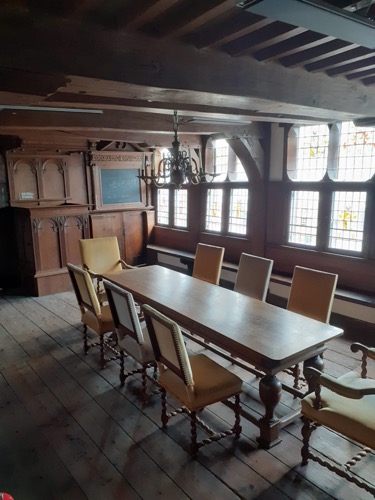
Until around 1920, mainly cheese was weighed in the Waag. The City Museum was then founded here and for several years the Waag has been used by the Oud Enkhuizen ('Old Enkhuizen') Association as a workplace, meeting room and archive.
Vereniging Oud Enkhuizen (2024)